Mission Statement
March 22, 2025, marks the 100th anniversary of the start of radio broadcasting in Japan. This dawn of radio broadcasting served as the vital starting point for the massive development we see today in acoustics, wireless technology, and digital audio. Sharp Corporation, which will celebrate its 113th anniversary in 2025, is one of the companies that pioneered this movement.
Around the time radio broadcasting began in Japan, our founder, Tokuji Hayakawa, discovered a crystal radio set made in the U.S. He researched it, leading to the production and sale of Japan’s very first domestically made crystal radio. It is no exaggeration to say that Sharp and the radio are inseparable.
Many of these historic Sharp products and the company’s history are exhibited at the Sharp Technology Innovation Museum in Tenri City, Nara Prefecture.
Sharp (then Hayakawa Electric) advanced into Higashihiroshima in 1967 and began the development, design, and production of radio equipment. Many audio engineers were trained here, and after retirement, they remained affiliated with the Sharp Alumni Association, Hiroshima Branch (Sharp Shayukai, Hiroshima Branch). They collaborate with engineers from the Kansai Branch Headquarters to support younger generations in the local community.
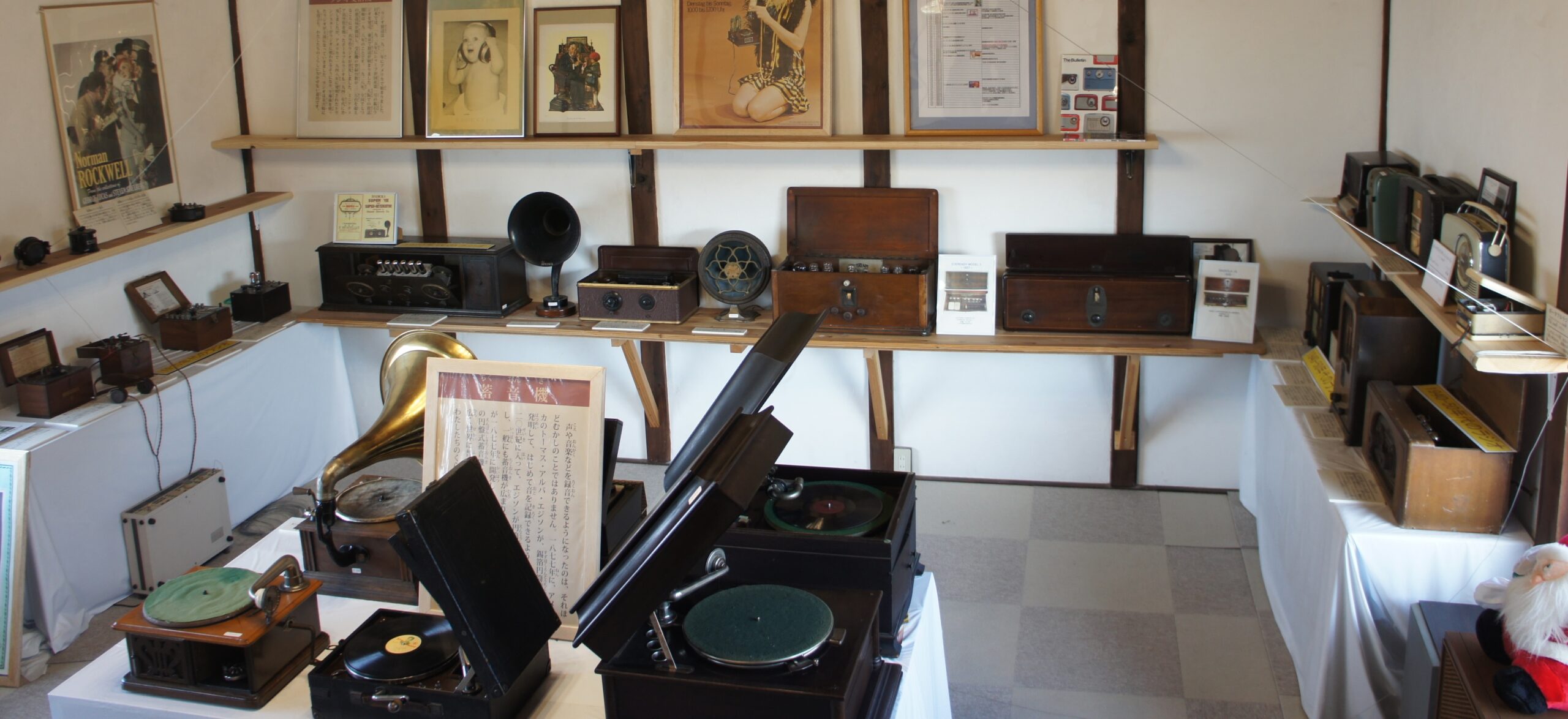
Through many years of ongoing exchange between the radio enthusiasts of the Sharp Shayukai Hiroshima Branch and the radio club at the Headquarters, an idea was born: to establish a private radio museum. This museum would serve as a base to display the vast and valuable collection of antique radios gathered by Mr. Taizo Arakawa, an Association member affiliated with the Headquarters, who spent his life collecting during his 18-year tenure in the United States and the United Kingdom.
The museum building utilizes a renovated traditional Japanese house (Kominka). We widely gathered volunteers who felt that a museum like this was essential in Japan, and with the provision of the collection from Mr. Arakawa, we established the Radio Museum Higashihiroshima in this city.
The significance of this museum lies in its operation, which is supported by the cooperation of local residents. It will contribute not only to local revitalization as a social contribution but also to the preservation of historically valuable industrial heritage.
I am confident that this venue will be a valuable resource for future generations and for researchers of radio history—those who wish to see the actual devices, compare European and American radios with Japanese radios, and study how Japan learned from the West and eventually surpassed it in development.
Director October 7, 2025